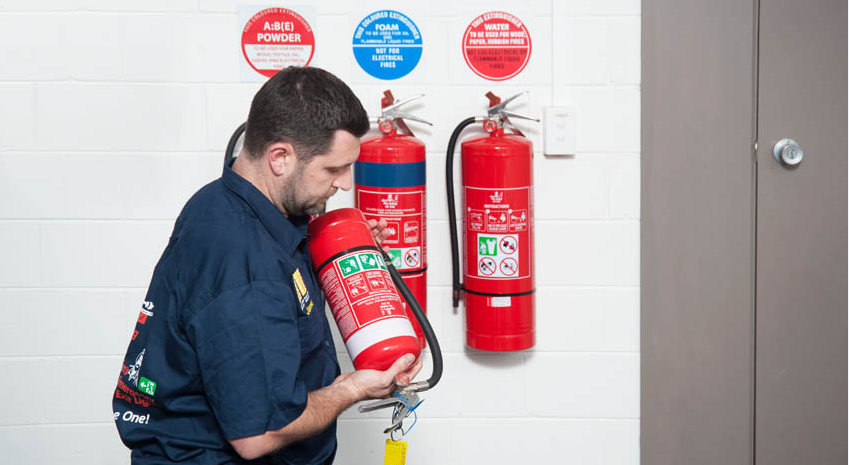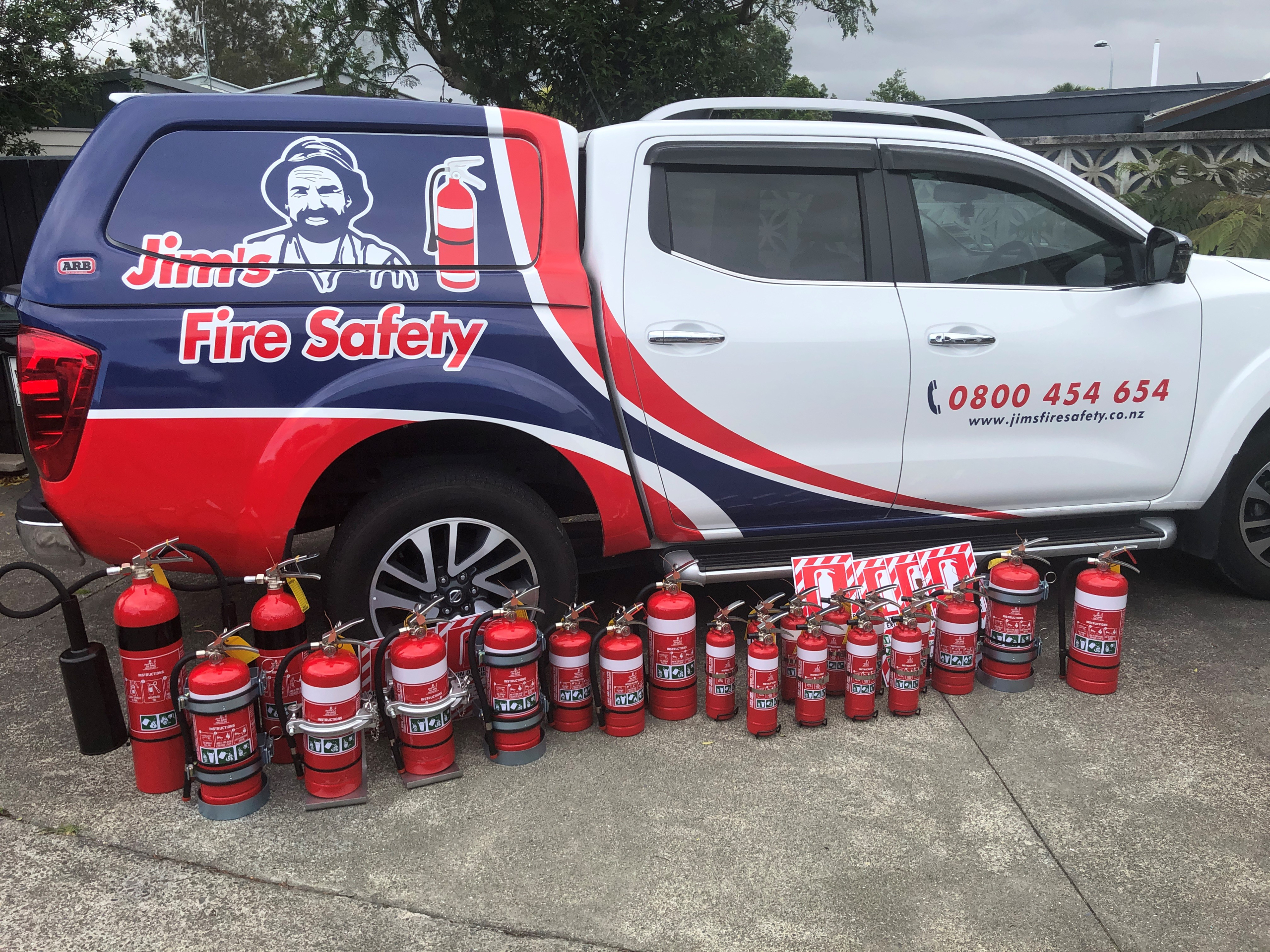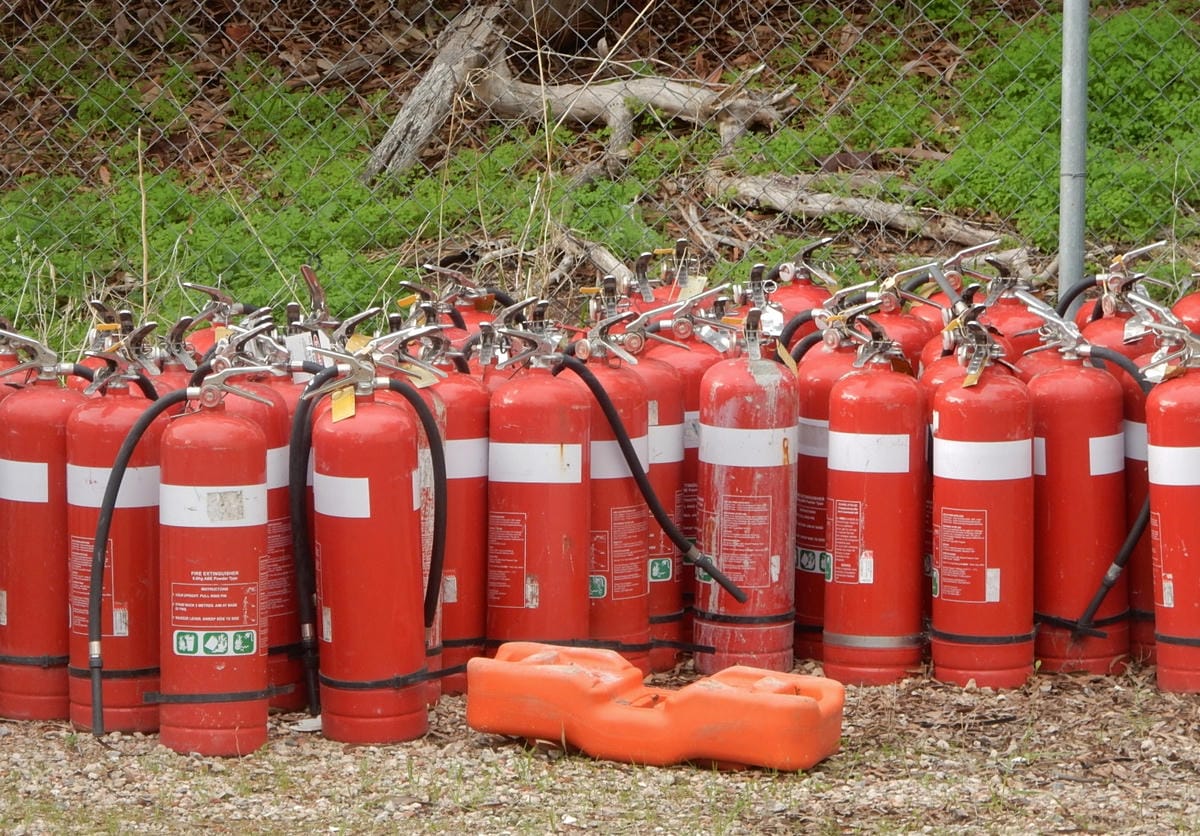
Do you have a red fire extinguisher with a white band?
Wondering what it’s for? How it works? What it does?
This post has everything you need to know about white-labelled fire extinguishers. Learn what fire class they’re used for, how they work, and if you need one for your workplace.
What is a White Band Fire Extinguisher Used for in NZ?
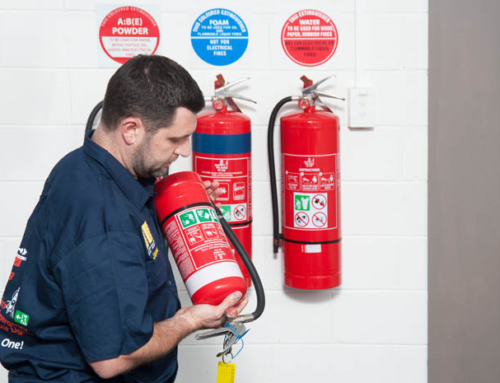
White fire extinguishers contain dry powder or dry chemical. This type of extinguisher comes in two varieties — ABE & BE.
White band fire extinguishers can be used on most fire classes, making them the most common extinguisher type. If your workplace faces multiple fire hazards, you may want to keep a white fire extinguisher on hand.
White extinguishers come in a variety of sizes, including 1kg, 1.5kg, 2kg, 2.5kg, 4.5kg, and 9kg models. Learn more about choosing a fire extinguisher size.
ABE White Extinguishers
Image: Steelkamp
ABE extinguishers contain a dry chemical powder that can put out these fire classes:
- Class A fires: Ordinary combustibles like wood, paper, plastic
- Class B fires: Combustible and flammable liquids
- Class C fires: Flammable gases
- Class E fires: Electrical fires
BE White Extinguishers
BE extinguishers contain a dry chemical that can put out these fire classes:
- Class B fires: Combustible and flammable liquids
- Class C fires: Flammable gases
- Class E fires: Electrical fires
- Class F fires: Cooking oils and fats
How Do Dry Powder Fire Extinguishers Work?
Fires need three components to thrive: heat, oxygen, and fuel. When you use a dry powder extinguisher, it puts out the fire by coating it with a substance that limits the fire’s oxygen supply and interferes with the fire on a chemical level.
The most common dry powder extinguishing agent is monoammonium phosphate combined with ammonium sulphate, also known as ABC dry chemical — or ABE dry powder in New Zealand!
Do I Need a White Extinguisher?
Thanks to their versatility, white extinguishers suit a wide range of domestic and industrial environments.
White extinguishers are especially well-suited for buildings that have many types of fire hazards. That’s because most other fire extinguisher types are only suitable for a few fire classes, and some can cause more issues if used on the incorrect class.
For instance, a water fire extinguisher can only be used on class A fires (solid materials) and should not be used around electrical equipment. So if you need a fire extinguisher for a study room, which might contain both computers and books, an ABE white fire extinguisher is the best choice.
For more information on portable fire extinguishers, check out our guide to fire extinguisher colours and extinguisher requirements in NZ workplaces.
Maintaining your White Fire Extinguisher
Like other fire extinguisher types, white powder extinguishers need regular inspection and testing to ensure they are safe to use.
In New Zealand, we test and tag fire extinguishers according to NZS 4503:2005 — Hand operated fire-fighting equipment.
Under this standard, you need to have your extinguisher inspected at least once every 12 months. It could be more or less frequent depending on the nature of your environment.
At Jim’s Fire Safety, our technicians are highly trained and experienced with all types of fire extinguishers. We provide professional inspection services across the country, ensuring that your equipment works for when you need it most.
To have your white extinguisher maintained and refilled, call us at 0800 454 654 or fill in the online form for a free quote.
Learn more about fire extinguishers, blankets, and reels in our fire safety blog.
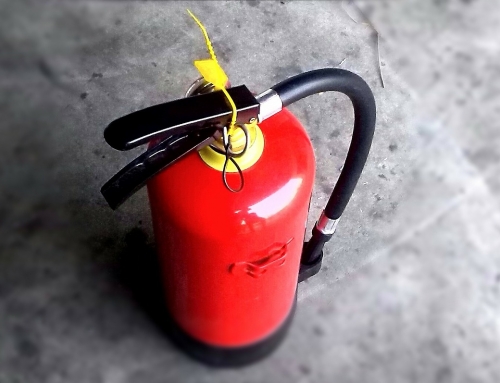
Featured image: Michael Coghlan (CC BY-SA 2.0)